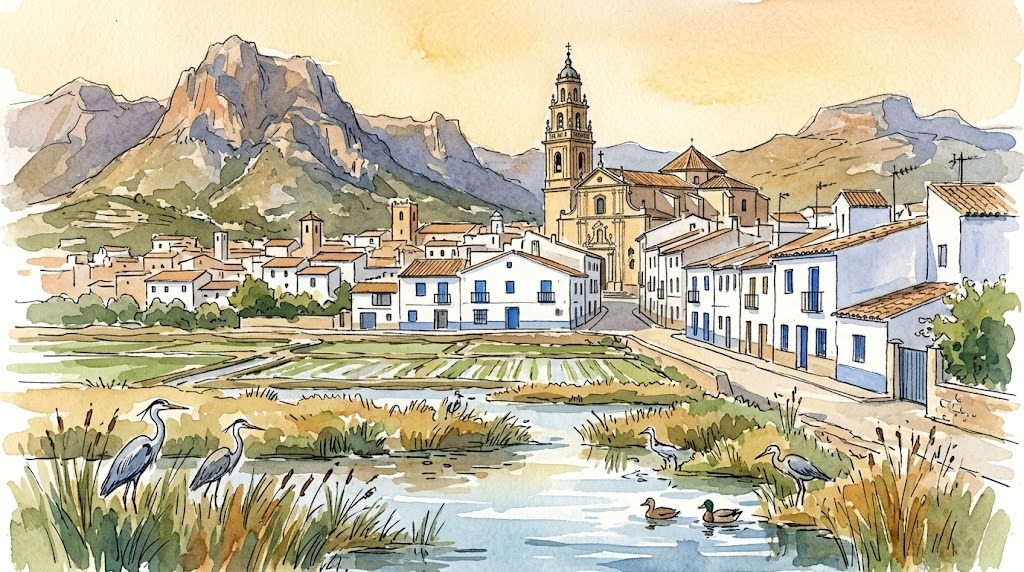
Pego Marshland Festival
Most visitors to the Costa Blanca never hear about the Pego-Oliva Marshland. They come for the beaches, the sun, the markets — and miss one of the most extraordinary pieces of wild landscape on the entire Spanish Mediterranean coast. The Pego Marshland Festival, held each February, is your invitation to step off the tourist trail and into something genuinely wild and wonderful.
The hidden wetland of the Costa Blanca
The Pego-Oliva Natural Park is the best-preserved coastal wetland in the Valencian Community. Covering more than two thousand hectares of marshland, rice fields and dunes between the towns of Pego and Oliva, it is a nature reserve of European importance. Over two hundred species of birds have been recorded here, along with rare amphibians, reptiles and fish — including the fartet, a tiny freshwater fish found only on the Iberian Peninsula and critically endangered elsewhere.
February is one of the best months to visit. Migratory birds pass through in large numbers, the sparse winter vegetation opens up long sightlines across the water, and the whole wetland has a quiet, alive quality that is completely different from the busy coastline just a few kilometres away.
A community celebration of wild nature
The Pego Marshland Festival began as an environmental awareness event but has grown into something more personal: a community act of love for the landscape that surrounds and defines the town of Pego. Local guides, naturalist associations, schoolchildren and families come together to spend a day exploring the park — learning about it, caring for it, and sharing the joy of being in it.
It is informal, welcoming and genuinely engaging in the way that the best outdoor events always are.
Programme and activities
Guided interpretive walks
Expert environmental guides lead small groups along the wooden walkways and trails of the natural park. These are not just nature walks — they are storytelling sessions, explaining the geology of the wetland, its ecological functioning, the threats it has faced and the conservation successes that have kept it alive. Walks are available at different difficulty levels, including family-friendly routes suitable for pushchairs and older visitors.
Birdwatching sessions
Guided birdwatching is one of the highlights of the festival. With binoculars provided or borrowed and an expert at your side, you’ll be scanning the reed beds and open water for herons, bitterns, ducks, waders and the occasional rarities that stop by during the February migration. Even non-birders tend to get hooked.
Children’s environmental workshops
Hands-on workshops help younger visitors connect with the wetland: identifying aquatic plants, finding animal tracks, building insect hotels and learning why marshlands matter for the planet. Activities are designed to be fun first and educational second.
Talks and photographic exhibitions
Conservation scientists and park technicians share updates on ongoing habitat restoration projects, species recovery programmes and the ongoing challenges facing the wetland. A photographic exhibition showcases the park’s biodiversity in stunning detail.
Food and local produce
Pego has a long history of rice cultivation tied to the wetland, and the festival wouldn’t be complete without a rice tasting. Local producers serve the classic Pego rice dishes — brothy, creamy and baked versions — alongside seasonal vegetables from the town’s orchards, honey and homemade preserves. It’s simple, honest food that tastes even better after a morning in the open air.
Getting there
Pego is inland in the Marina Alta, 18 km from Dénia and 20 km from Oliva. Access to the natural park from Pego is straightforward following festival day signage. Parking areas are set up at the park’s entrance points for the event. Check the official Pego town website for transport recommendations and car park locations.
Where to stay
Pego and the surrounding hills have a handful of rural guesthouses and agrotourism properties. For a wider choice, both Dénia and Oliva are less than half an hour away and offer hotels at various price points.
Practical information
The festival takes place on 22 February 2026. Guided walks may require prior registration through the Pego town council website. Dress warmly and waterproof — February mornings in the marshland can be cold and damp. Sturdy waterproof footwear is recommended. Binoculars are a valuable addition. Entry to the natural park is free.
Tips for visitors
Arrive early and register for the walks in advance — groups are deliberately kept small to protect the wildlife. Bring your own binoculars if you have them. Pack water and snacks for longer routes. Follow guide instructions at all times to avoid disturbing nesting birds and sensitive habitats.
The morning that changes how you see things
There is a particular silence in the Pego marshland just after dawn when the mist is still lying on the water and the reed buntings are starting to sing. It is the kind of silence that empties your head and fills your lungs. The Pego Marshland Festival is an invitation to experience exactly that — and to leave with a deeper understanding of why places like this are worth protecting. That understanding, once gained, is very hard to lose.