Benissa
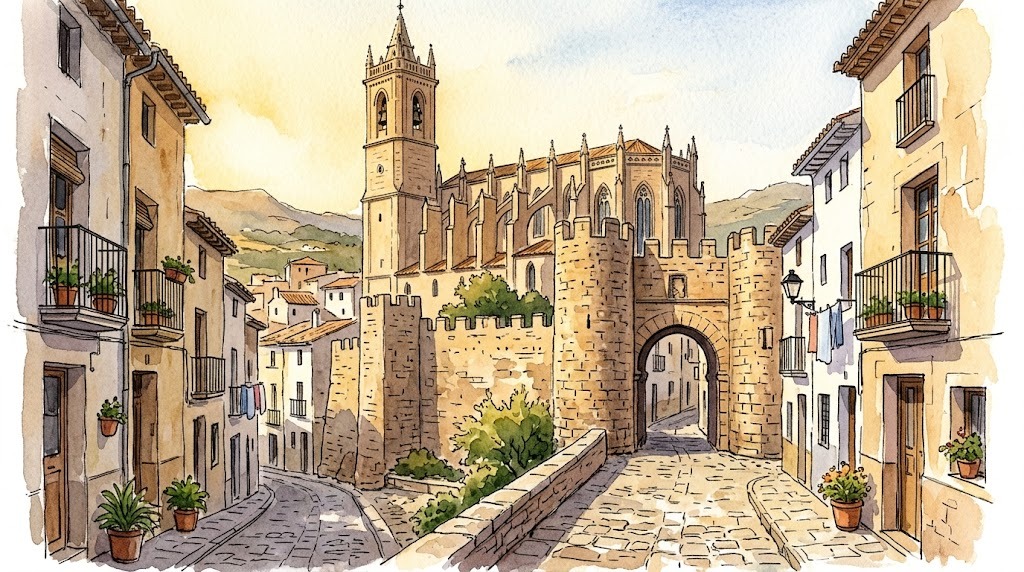
Benissa: a hill town with a coastline
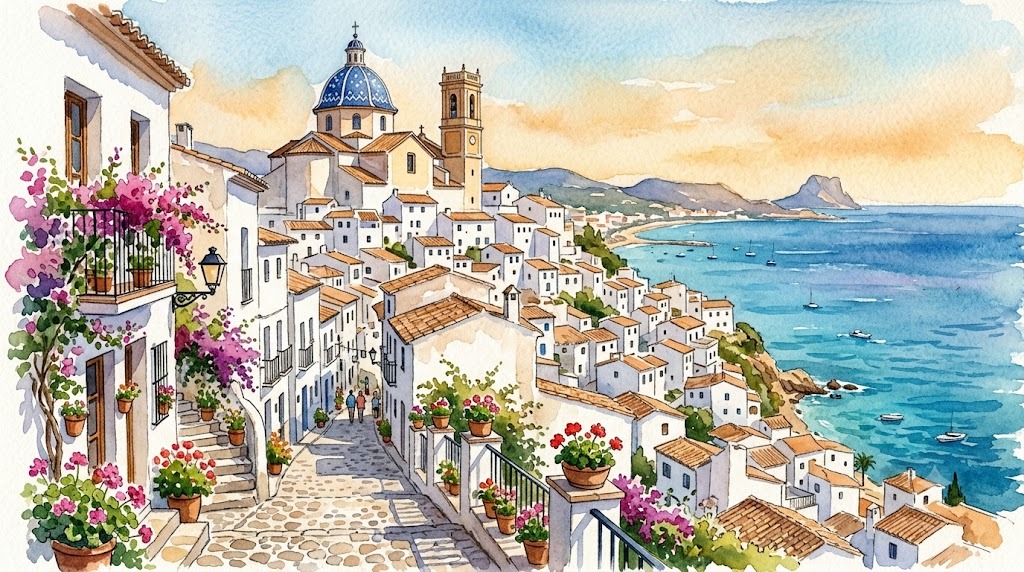
Benissa has 12,471 inhabitants (INE, 2025) and a quirk worth understanding before you come: the town sits at 284 metres altitude, inland, and the coast is a separate strip several kilometres away. There is no seafront promenade and no urban beach: these are two distinct visits and you have to plan them as such.
- Up top, the town: a historic centre of cobbled streets and the “Cathedral of the Marina”, a neo-Gothic basilica out of all proportion to the size of the municipality.
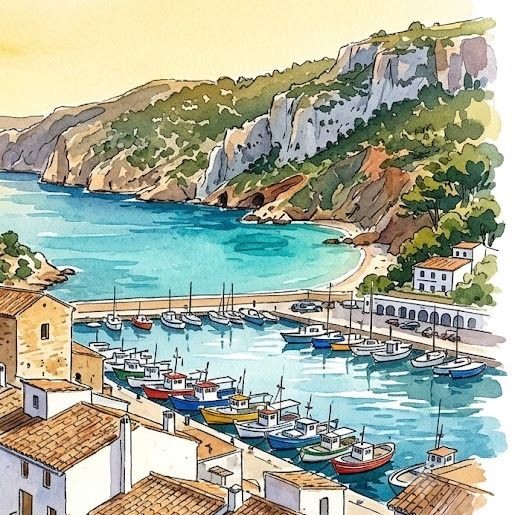
- Down below, the coast: barely 4 kilometres wedged between Calp and Moraira, with six coves and the Ecological Walk linking them along the top of the cliffs.
Of those six, three have a beach bar and a lifeguard in season: La Fustera, l’Advocat and Baladrar. And the Blue Flags are l’Advocat and Baladrar, not La Fustera. The other three — Les Bassetes, Els Pinets and Llobella — have no facilities at all and are reached down steps, which is why they stay quiet even in August.
Benissa guides
- Benissa coves — the six coves south to north, with access, parking, facilities and the Ecological Walk
- Marina Alta summer fiestas — Benissa’s Moros i Cristians, with day-by-day programmes
The “Cathedral of the Marina”
The Minor Basilica of the Puríssima Xiqueta — formally the Purísima Concepción — is what gives the town its nickname. It is neo-Gothic, was completed in 1929, and the “Cathedral of the Marina” tag comes simply from the scale of its dimensions: a cathedral-sized church in a municipality of twelve thousand people.
Around it, the historic centre keeps the Iglesia Vieja (La Sala), the Gothic exchange house on the Plaza de la Iglesia Vieja, along with cobbled streets, gateways and Valencian manor houses.
The six coves, south to north
This is the real order of the coast, coming from Calp towards Moraira:
| Cove | What it is |
|---|---|
| Les Bassetes | The first one from Calp, beside the sailing club |
| Playa de La Fustera | The big sandy one: lifeguard, beach bar, restaurant, toilets, foot showers and parking. No Blue Flag |
| Cala dels Pinets | Rock and pebbles, with pines |
| Cala de la Llobella | Pebbles, reached by steps |
| Platgeta de l’Advocat | Small and sheltered, sand and shingle. Blue Flag, beach bar and lifeguard in season |
| Cala Baladrar | The northernmost and the best known. Pebbles. Blue Flag, beach bar and lifeguard in season |
The Ecological Walk links almost all of them along the clifftops, and it is one of the most rewarding coastal walks on the Costa Blanca. The detail on each is in the coves guide.
If you have read that Benissa has a “Cala Bol Nou”, that is an error circulating in many guides: that cove is in La Vila Joiosa, 60 km to the south.
History
James I arrived in Benissa in 1248 and annexed it to the Kingdom of Valencia. Its position between the coast and the interior made it a commercial and defensive centre, which is where the layout of the old quarter and its surviving manor houses come from.
Food
Inland cooking rather than seafood, despite the coastline:
- Arròs amb fesols i naps, rice with beans and turnips, the winter dish of the whole comarca
- Coca de recapte and artisan bread
- Mediterranean fish down on the coast
- Wine from the comarca
Fiestas: the real calendar
| Fiesta | When (2026) |
|---|---|
| Fira i Porrat de Sant Antoni | 17-26 January |
| Patronal: Puríssima Xiqueta | 25 April – 4 May |
| Moros i Cristians | 19-29 June |
| SONE Festival | 3-6 July |
The Puríssima Xiqueta patronal fiestas, straddling April and May, are the town’s big ones. And the June Moros i Cristians are among the longest in the comarca, with eleven days of programme.
Getting there and getting around
- By car: the N-332 or the AP-7. The town is inland; you descend to the coast through the shoreline developments, and you need a car to move between the coves
- By TRAM: there is no stop in Benissa. Line 9 passes through Calp and Gata de Gorgos; from there, bus or taxi
- By bus: connections with Calp, Teulada-Moraira and Dénia
Parking at the coves: limited at all of them and very tight in summer. La Fustera has the largest; l’Advocat and Baladrar have their own car parks, with accessible spaces.
When to come
- Spring and autumn: the best for the Ecological Walk and the historic centre
- January: the Fira i Porrat de Sant Antoni, one of the most traditional fairs in the Marina Alta
- Late April: the patronal fiestas
- August: the northern coves stay quiet because you have to walk down; La Fustera does fill up
What’s nearby
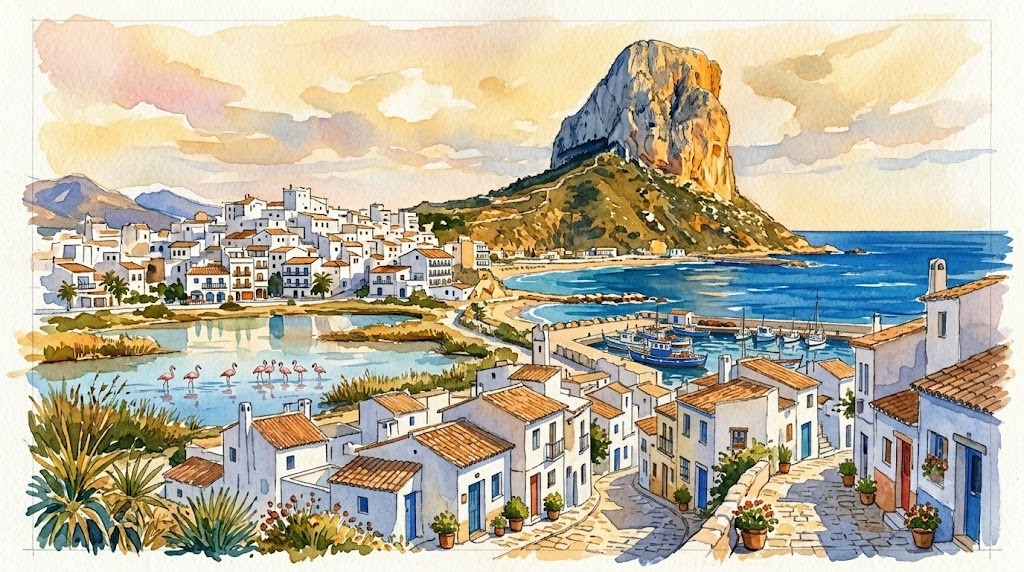
- To the south, Calpe and its Peñón; to the north, Moraira and Jávea
- The Cala del Moraig and Cala Llebeig, over in Benitatxell
- All the coves of the Costa Blanca, the index by municipality
Places in Benissa
📖 Guides to Benissa
- Benissa Coves: Complete Guide 2026 with the Ecological Coastal Path The 6 coves of Benissa, south to north: Les Bassetes, La Fustera, Els Pinets, Llobella, l'Advocat and Baladrar (the two with Blue Flags), linked by the 3.2 km Paseo Ecológico. Access, parking, facilities and snorkelling.