Jávea
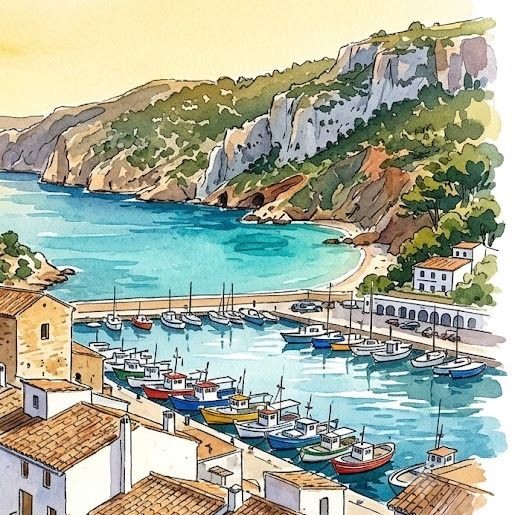
Jávea (Xàbia): a town of three centres
The first thing to understand about Xàbia is that it is not one village but three separate centres, a few kilometres apart, and mixing them up is the commonest mistake when planning a visit:
- El poble (the historic centre), inland, around the fortress church of San Bartolomé. This is the Xàbia of narrow streets and tosca stone.
- Duanes de la Mar (the port), the fishing quarter, with the fish market and the Loreto church.
- El Arenal, the beach area, where most of the hotels and restaurants are.
There are about 2 kilometres between them and an urban bus network with low frequency, so without a car you need to choose carefully where to stay.
The municipality has 29,760 inhabitants (INE, 2025) and around 25 kilometres of coast between the Cap de Sant Antoni and the Granadella, closed off to the north by the Montgó massif.
Map of Jávea
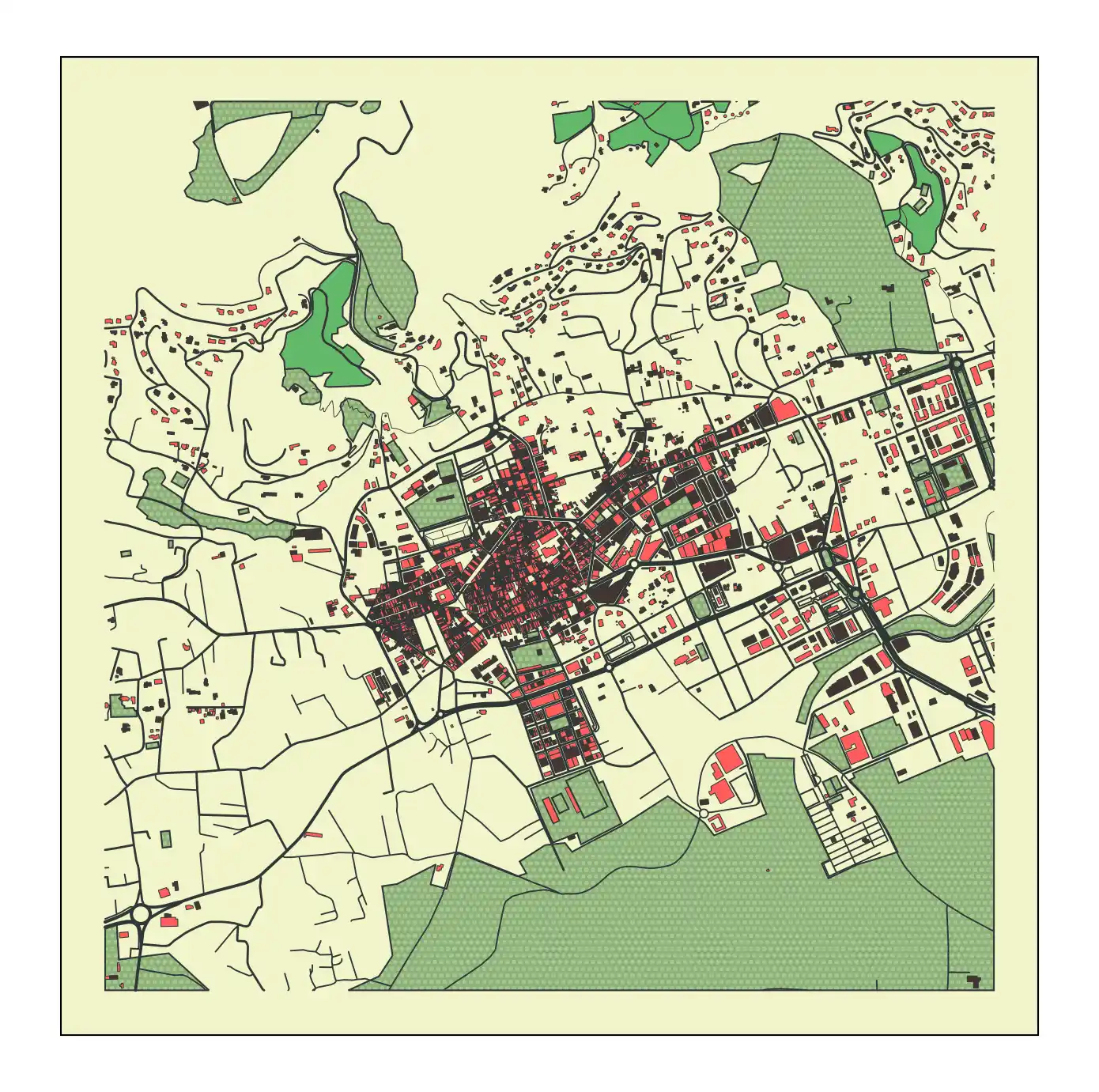
Topographic map of the Xàbia municipality: the poble inland, Duanes de la Mar to the north and the Arenal in the middle of the bay
Jávea guides by theme
- Jávea beaches and coves — the 8 official beaches and coves north to south, the 2026 regulated access and the Blue Flags
- Nature and hiking — the Montgó, the two capes and the coastal paths
- Heritage and history — the fortress church, the windmills and the watchtowers
- Events and fiestas — the full festive calendar
The coast: a single sand beach
A common misunderstanding needs clearing up here. Xàbia does not have golden sand beaches: it has one sand beach, El Arenal, about 480 metres of coarse sand in the middle of the bay. Everything else is gravel, boulders and tosca — the fossilised sandstone you see along the Muntanyars — and that is precisely why its water is among the clearest on the Costa Blanca.
In 2026 three of them fly the Blue Flag: El Arenal (regained this year), La Grava at the port and Cala Granadella.
The essential ones:
- Cala Granadella: 160 metres of gravel and boulders in a semicircular bay; the most famous cove on the Costa Blanca
- La Barraca – Portitxol: the town’s postcard, facing the Illa del Portitxol, with white fishermen’s huts and blue doors
- Cala Blanca / Les Caletes: two small coves with almost always calm water, good for snorkelling
- Cala Sardinera: on foot or by sea only, no facilities
- Cala Ambolo: closed for years due to rockfall risk, with access prohibited and fines
Practical warning for summer 2026: driving to the Granadella and the Portitxol is regulated from 2 June to 6 September (plus some September weekends), with paid parking at €9/day and barriers that close once the 130 and 59 spaces fill up. A tourist train runs up to the Granadella from La Guardia Park. Details in the beaches guide.
The port: the part that lives all year
Duanes de la Mar is the liveliest quarter out of season. Its origins go back to the 15th century, but the first documented dock dates from 1871, and its heyday was the 19th century, thanks to the raisin trade: when that business collapsed, fishing became the main activity.
On the fish market it is worth being precise, because many guides get it wrong:
- Around 15:30 the boats come in and you can watch the unloading from the mole
- From 16:00 to 16:30 the auction is held behind closed doors: it cannot be visited
- From 16:30 you can buy at the fish counter in the lonja (until 20:00 in winter and 21:30 in summer)
The other reason to go down to the port is the church of Nuestra Señora de Loreto (1967), with an oval plan, walls without corners and a red pine roof shaped like an upturned ship’s keel in homage to the fishermen, plus twelve external concrete ribs for the apostles. It is one of the most interesting works of contemporary religious architecture in the Valencian Community. Full page: Port de Xàbia.
Heritage
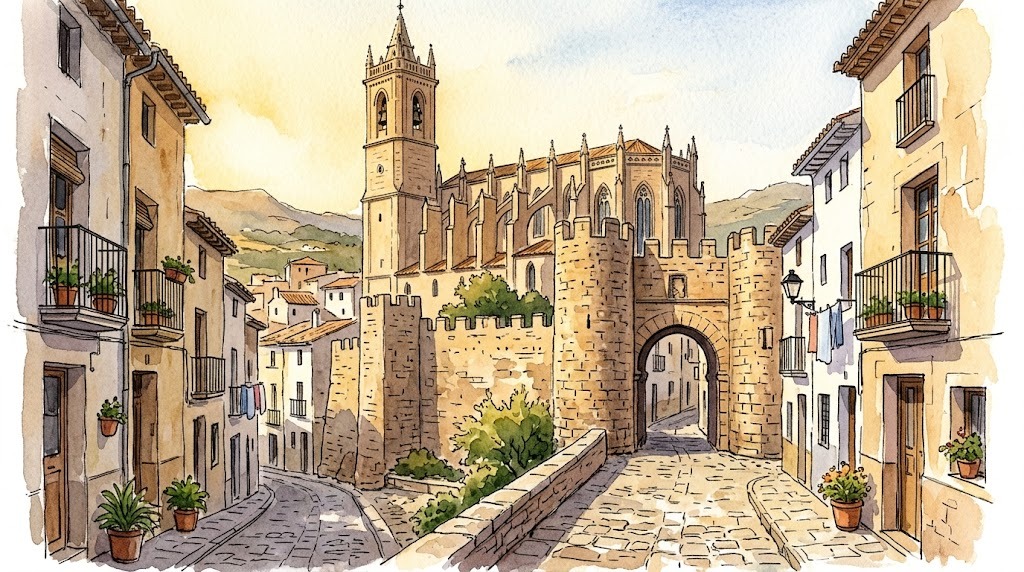
The parish church of the old town is the Fortress Church of San Bartolomé, Gothic, a listed National Monument and built to look like a castle in order to withstand pirate raids, a routine threat on this coast for centuries. It is the building that organises the poble.
Scattered across the municipality are also the windmills of La Plana, at the Mirador dels Molins, and coastal watchtowers such as the Torre del Ambolo.
Nature
- The Montgó Natural Park, shared with Dénia, closes the municipality to the north
- The Cap de Sant Antoni and its marine reserve, where the Montgó’s red route starts
- The Cap de la Nao, the eastern tip, with its lighthouse
- The Cova Tallada, between Xàbia and Dénia, with restricted access in summer
- Viewpoints: Punta de l’Estrella and the Castell de la Granadella viewpoint
Fiestas: the real calendar
Xàbia does not concentrate its fiestas in August, as is sometimes written. The calendar, with 2026 dates:
| Fiesta | When | Where |
|---|---|---|
| Sant Sebastià | 17-20 January | El poble |
| Jesús Nazareno | 9-16 March | El poble |
| Fogueres de Sant Joan | 20-24 June | Arenal and beach |
| Moros i Cristians | July | Duanes de la Mar |
| Mare de Déu de Loreto | 26 August – 8 September | Duanes de la Mar (the port) |
| Mercat Medieval | 20-22 November | El poble |
The port’s patronal fiestas, in honour of the Mare de Déu de Loreto, are the most seafaring of all: their main day is 8 September, with bous a la mar, a maritime procession and a waterborne fireworks castle.
Getting there and getting around
The fact that wrecks most plans: the TRAM does not reach Xàbia. Line 9 does not serve the municipality; the nearest stops are Gata de Gorgos or Dénia.
- By car: the N-332 and then the CV-734. From Valencia via the AP-7, about 2 hours; from Alicante, around 1 hour.
- By bus: Autocares Carrió (line 2) connects with Dénia, Gata de Gorgos, Jesús Pobre, La Xara and the hospital; ALSA links to Alicante and Valencia. The bus station is on Avenida de Palmela.
- Between the three centres: there is an urban network linking the poble, the port and the Arenal, but at low frequency. With luggage or children, count on a car or a taxi.
When to come
June and September are the best months: the water is warm, there is no regulated access to the coves (except the marked September weekends) and occupancy is not “very high”. July and August are when the paid barriers go up, the car parks fill from mid-morning and most of the summer fiestas fall. Spring and autumn are excellent for the Montgó and the coastal paths, which in August are punishing in the heat.
Practical tips
- Water shoes on every beach except El Arenal: the tosca and the boulders are unforgiving.
- If you want to buy fish at the lonja, the time is from 16:30, not in the morning.
- Choose the centre before the hotel: staying at the Arenal and wanting to dine at the port every night means a car or a taxi.
- For the Granadella in summer, before 9:30 or take the tourist train.
What’s nearby
- To the north, Dénia; to the south, Benissa and its coves
- In Benitatxell, Cala del Moraig and Cala Llebeig — which are not in Xàbia, however many guides present them that way
- All the coves of the Costa Blanca, the index by municipality
Places in Jávea
📖 Guides to Jávea
- Jávea Beaches and Coves: Complete Guide 2026 The 8 official beaches and coves of Xàbia/Jávea north to south (La Grava, the Muntanyars, Arenal, Cala Blanca, Sardinera, Portitxol, Granadella) plus Francés, en Caló and Ambolo. Access, 2026 regulated parking, facilities, Blue Flags and snorkelling.
- Javea Events & Festivals: Complete Guide 2026 Complete calendar of events, festivals and traditions in Javea. Patron saint festival, fishermen's market, cultural events. Living maritime traditions on the Costa Blanca.
- Javea Heritage & History: Complete Guide 2026 Complete guide to Javea's heritage and history. Gothic church, historic mills, defense towers, local traditions. Medieval architecture on the Costa Blanca.
- Javea Nature & Hiking: Complete Guide 2026 Complete guide to nature and hiking in Javea. Coastal trails, viewpoints, marine and terrestrial flora, birdwatching. Ecological escapes on the Costa Blanca.