Dénia
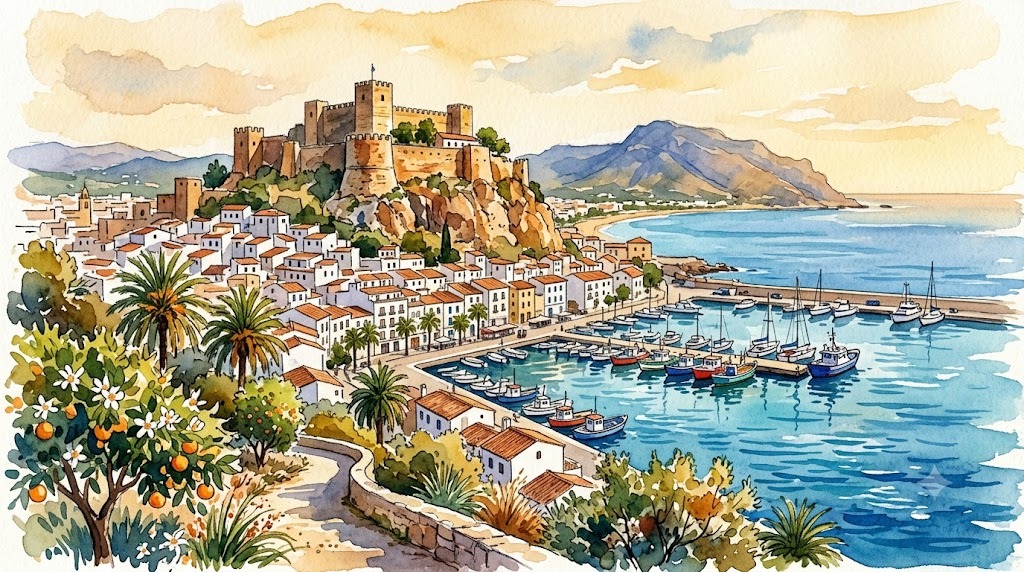
Dénia: capital of the Marina Alta
Dénia is the capital of the comarca, the largest town on the northern Alicante coast with 47,261 inhabitants (INE, 2025), and since 2015 it has been a UNESCO Creative City of Gastronomy — the only title of its kind in the province.
The most useful thing to know before coming is that its coast is split into two halves that are nothing alike, separated by the port:
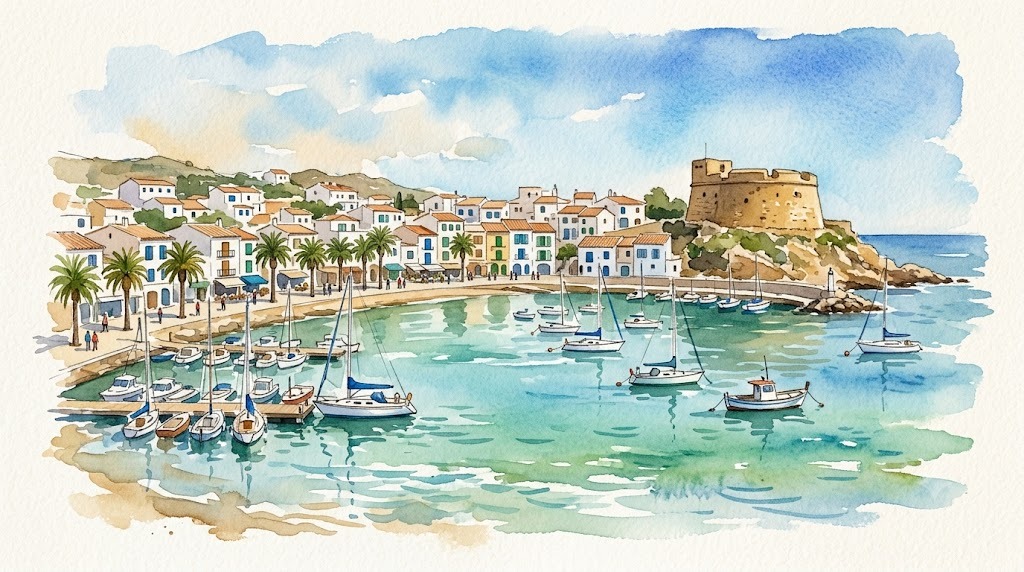
- To the north, Les Marines: nearly 20 kilometres of fine sand and dunes, beach bars, residential developments and seven Blue Flags in 2026.
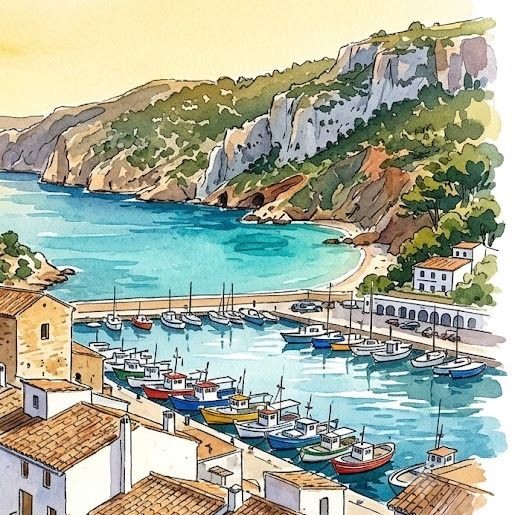
- To the south, Les Rotes: a rocky shoreline of small coves inside the Cap de Sant Antoni Marine Reserve, with the clearest water in the municipality and the best snorkelling in the Marina Alta.
Picking the wrong half is the commonest mistake: if you want sand and a parasol, do not go to Les Rotes; if you want snorkelling and transparent water, do not stay in Les Marines.
Map of Dénia
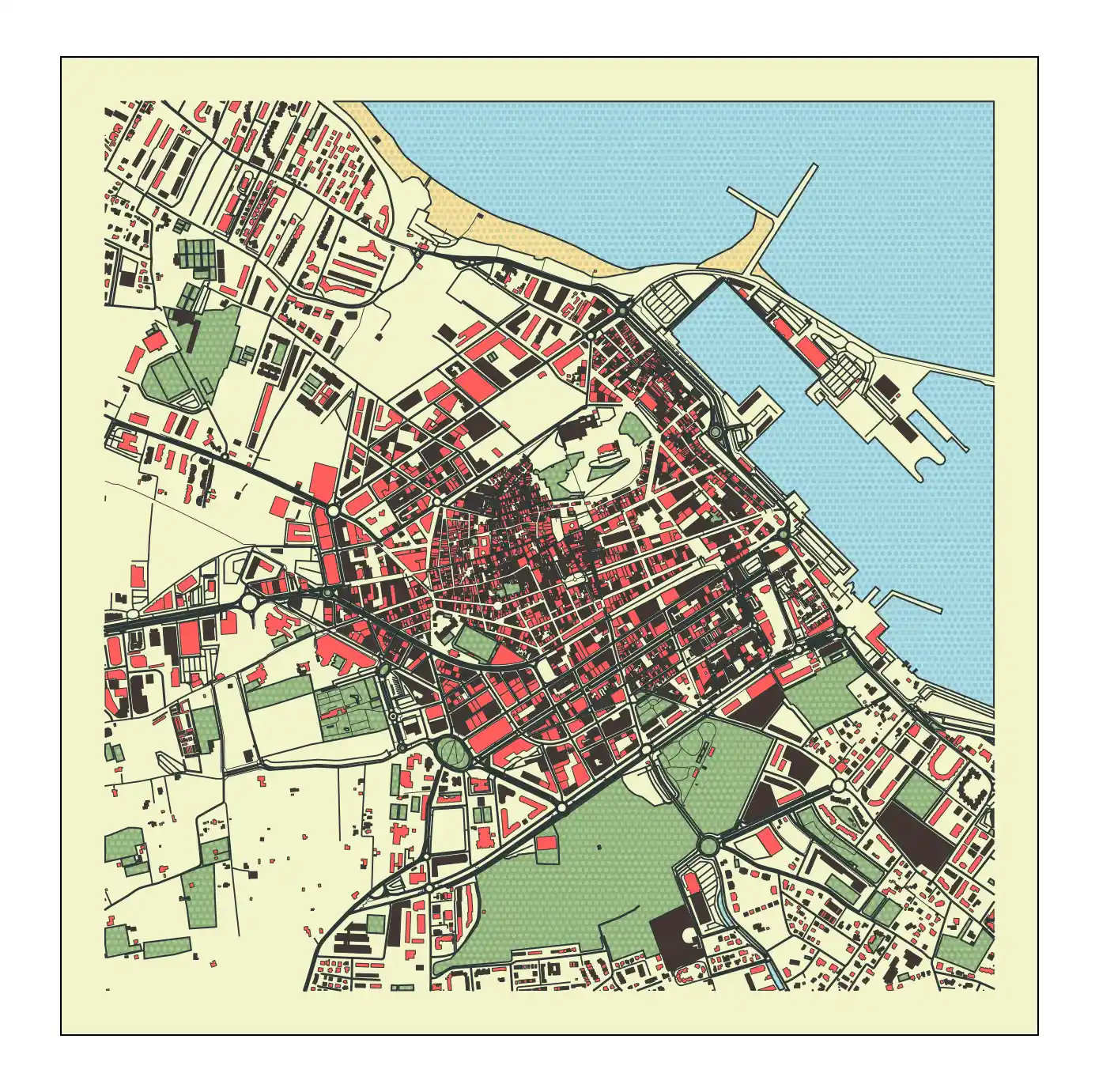
Topographic map of Dénia: the town centre and the castle in the middle, Les Marines to the north and Les Rotes to the south, below the Montgó
Dénia guides
- Dénia beaches and coves — the 12 beaches and coves north to south, with the seven Blue Flags, access and the summer traffic restriction at Les Rotes
- Marina Alta summer fiestas — the Santíssima Sang and the Bous a la Mar, with day-by-day programmes
The castle, and a fact almost no guide has caught up with
The castle of Dénia stands on a 60-metre hill right in the centre of town: it is both the main monument and the best viewpoint, taking in the whole bay, the port, the Montgó and — on clear days — the outline of Ibiza.
The Archaeological Museum is no longer inside. The Museu Arqueològic left the castle on 8 October 2024, after 66 years in the Palau del Governador, and is now in the Casa de la Marquesa (C/ Cavallers, 3) in the old town. In its place, in the palace’s east gallery, there is a City Interpretation Centre. Many guides still send people up to the castle to see a museum that has moved.
Right below the castle, on the same street, are both museums: the Museu Arqueològic (Cavallers 3) and the Museu Etnològic (Cavallers 1).
In July the castle becomes a stage: the Nits al Castell run all month.
Food: the red prawn
Dénia’s emblematic product is the gamba roja, the red prawn — not the white one. It is the flag of its cooking and the axis of its gastronomic identity, to the point that the municipal tourism portal leads with it. The UNESCO recognition was built around it and the daily catch, and it rewards not only quality but the town’s commitment to sustainability and to passing on culinary knowledge.
The traditional dishes to look for:
- Arròs a banda, rice cooked in fish stock that is served separately
- Suquet de peix, the fishermen’s stew of fish and potato
- Fideuà, paella’s cousin made with noodles
- And the gamba roja, which in Dénia is eaten as plainly as possible
For fresh produce, the Mercat Municipal is the reference in the centre.
Beaches: choosing your half
Les Marines (north, sand):
- Punta del Raset — walkable from the centre
- Les Marines — sand, beach bars, families
- Les Bovetes — the most accessible: amphibious chair and full facilities
- Les Deveses — the far north, windy enough for sailing sports
Les Rotes (south, rock): the whole set of coves is covered on the Les Rotes page. The only sandy one is the Marineta Cassiana, shallow and calm, with a Blue Flag and a fully adapted toilet; you can walk to it from the port. For snorkelling, Punta Negra — Blue Flag since 2025, unusually for a rock beach — and Les Arenetes.
Summer warning: from 13 June to 13 September, between 8:00 and 20:00, the final stretch of the Les Rotes road is closed to private traffic. There is a free 140-space public car park and a tourist train that runs along the coves from 9:00 to 14:00 and from 16:00 to 20:00. Outside those dates you can drive to the end. The dates change every year: confirm them.
Nature
- The Montgó Natural Park, shared with Xàbia, closes the municipality to the south
- The Cap de Sant Antoni and its marine reserve, which is why the water at Les Rotes is the way it is
- The Cova Tallada, between Dénia and Xàbia: visiting requires a compulsory, free advance booking; you cannot get in without one in season
Fiestas: the real calendar
| Fiesta | When (2026) |
|---|---|
| Fallas | 15-19 March |
| Nits al Castell | all July |
| Fiestas Mayores: Santíssima Sang | 3-12 July |
| Bous a la Mar | 5-11 July |
| Moros y Cristianos | 13-16 August |
| D*na gastronomy festival | 26-27 September |
| All Saints’ Fair | 17 October – 2 November |
The big ones are the Fiestas Mayores de la Santíssima Sang in July and, within them, the Bous a la Mar: bulls run in a square left open to the port, from which both animal and runners end up in the water. It is the image Dénia is known by across the Valencian Community.
Getting there and getting around
- By car: the AP-7 from Valencia (about 2 hours) or Alicante (around 1 hour). From Alicante airport, an hour and a half.
- By TRAM: Dénia is the terminus of line 9, which links it to Benidorm and, with a change, to Alicante. It is a narrow-gauge tram, not a RENFE station: there is no conventional railway.
- By boat: the port has scheduled services to Ibiza and Formentera. That is the town’s real maritime connection.
- By bus: connections along the coast and with the inland villages of the comarca.
When to come
- Spring (March to May): mild weather, no traffic restriction at Les Rotes and no crowds
- July: the month of the Fiestas Mayores and the Nits al Castell, but also of the closed road and full beaches
- September and October: the water is still warm, the D*na festival arrives and in October the All Saints’ Fair begins
- Winter: the town works all year; a good time for the castle, the museums and the Montgó without the heat
What’s nearby
- To the south, Jávea and its coast; inland, Gata de Gorgos, Ondara, Orba and Pego
- All the coves of the Costa Blanca, the index by municipality
Places in Dénia
📖 Guides to Dénia
- Dénia Beaches and Coves: Complete Guide 2026 All 12 beaches and coves of Dénia, north to south: Les Marines (sand, seven Blue Flags) and Les Rotes (rocky coves inside a marine reserve). Access, parking, facilities, snorkelling and the summer traffic restriction at Les Rotes.
- Marina Alta Summer Festivals 2026: Guide and Programmes by Town Complete guide to the Marina Alta summer festivals 2026: dates and day-by-day programme by town. Bous a la mar, Moros i Cristians, mascletàs and processions in Dénia, Xàbia, Calp, Benissa, Moraira and more.