Calpe
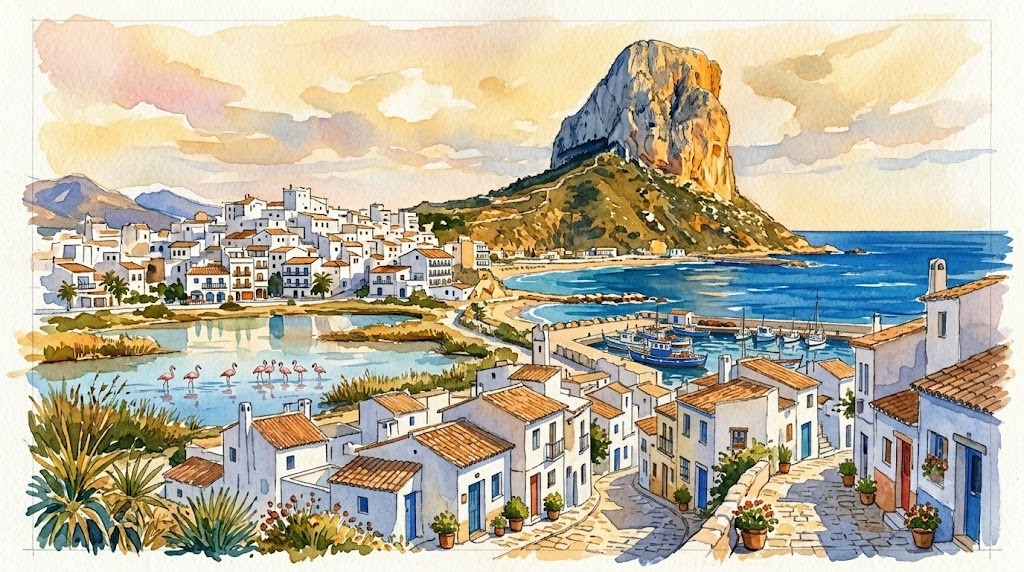
Calp: the town of the Peñón
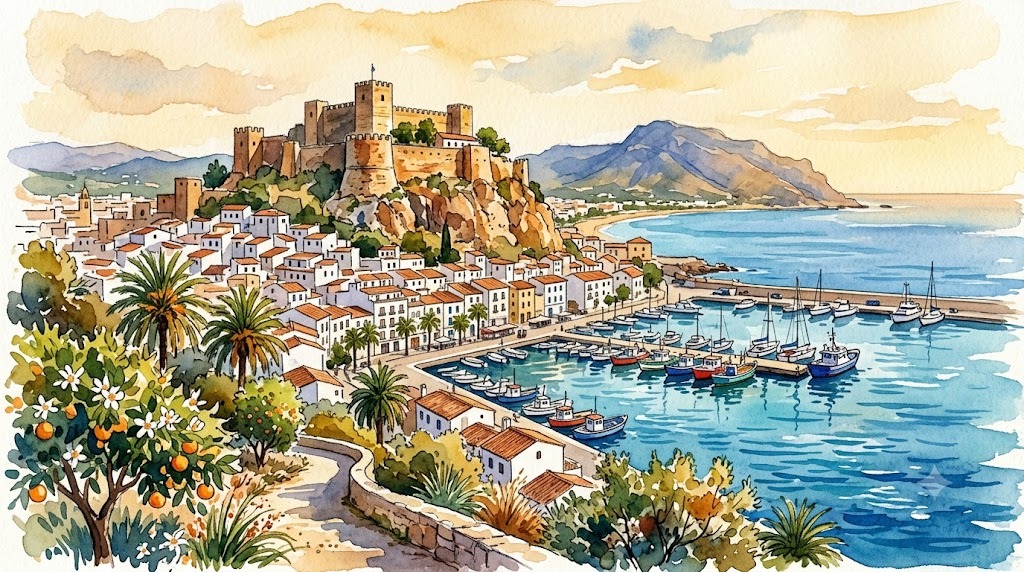
Calp is a coastal town of 27,616 inhabitants (INE, 2025) that the world knows by a single outline: the Peñón de Ifach, 332 metres of limestone rising straight out of the sea and the most recognisable landmark on the Costa Blanca.
But what really shapes a visit to Calp are two things almost no guide mentions together: that climbing the Peñón requires an advance booking, and that the town has a flamingo wetland right in the middle of its streets.
Map of Calp
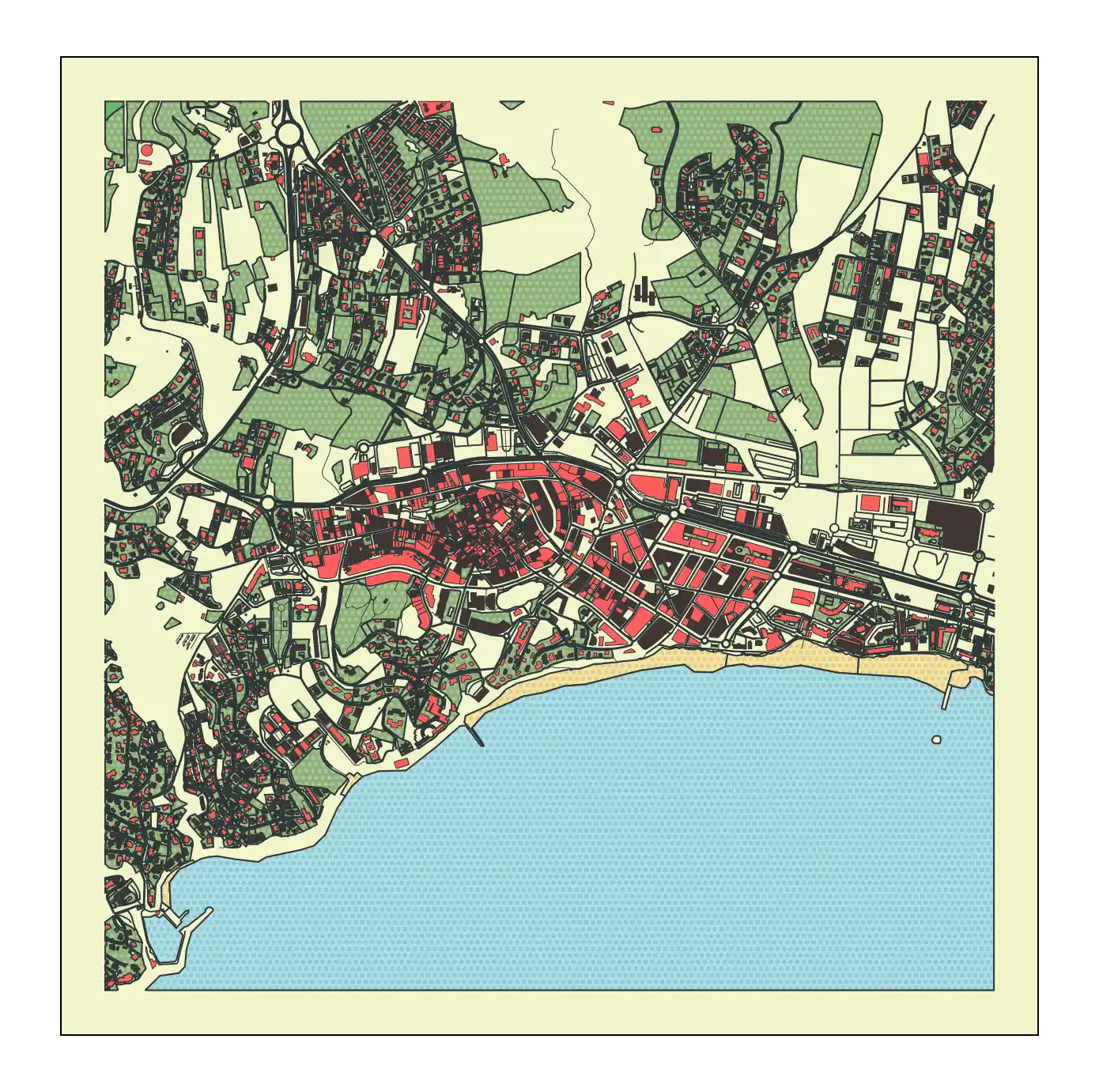
Topographic map of Calp: the Peñón closing the bay to the north, the Salines in the urban centre and the port at its foot
Calp guides
- Calp beaches and coves — the 14 beaches and coves north to south, with the three Blue Flags and the Penyal booking system
- Marina Alta summer fiestas — the Mare de Déu de les Neus, with day-by-day programmes
The Peñón de Ifach: you need to book
This is the first thing to know, because a lot of people turn up and are left at the bottom.
Climbing the Penyal d’Ifac is no longer a matter of showing up. The Natural Park’s governing board introduced advance booking to pass the visitor centre turnstile towards the tunnel and the summit, with a quota of 300 visitors a day on the ascent path. The booking:
- is made online, up to 10 days in advance
- can be requested the same day if places remain
- is personal and non-transferable, and park wardens may ask to see it
In high season the 300 places sell out. Book before you plan the day around it.
The path is 1.5 km there and back with about 200 metres of ascent, through a tunnel halfway up. From the top you see the whole coast and, on clear days, the outline of the Balearics. It is a protected Natural Park, with Aleppo pine and juniper and birds of prey over the cliffs. Full page: Peñón de Ifach.
Les Salines: flamingos without leaving town
This is Calp’s other face and the one that surprises people who did not know: a 41-hectare wetland in the middle of the built-up area, with the Penyal behind it, where you can see flamingos.
- The best months are May, June, July and August, with several hundred birds, though they are present much of the year and numbers fluctuate a great deal
- It is not a breeding colony: only one nesting attempt is on record, in the summer of 2002
- The outer perimeter path is freely open, free of charge all year and accessible: flat, with non-slip paving, interpretation panels and benches with backrests. The inner path to the bird hides is not accessible
- Sources disagree on the length: the accessible-tourism audit gives 2.3 km for the accessible circuit from the Peñón Tourist Office, while others give 3.9 km for the full circular. Allow between 45 minutes and an hour and a half
Full page: Les Salines de Calp.
Beaches: 14 of them, three with Blue Flags
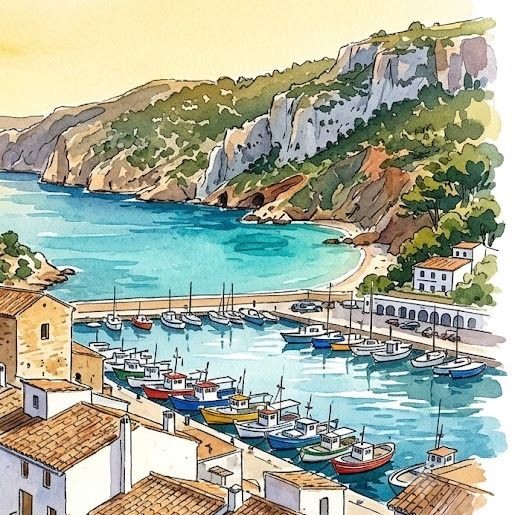
Calp has 14 beaches and coves between the Penyal and the Morro de Toix. The ones worth knowing:
- Playa de Levante or La Fossa — the main one and the busiest, with a Blue Flag; not a quiet alternative
- Playa Arenal-Bol — the other big one, Blue Flag, south of the Penyal
- Playa Cantal Roig — small, next to the port, Blue Flag and the most sheltered
- Cala el Racó — at the very foot of the Peñón
- Cala Les Urques — the only one open to dogs
- To the south, the wildest coves: Gasparet, El Collao and Puerto Blanco
All 14, with seabed type, facilities and parking, are in the beaches guide.
Fiestas: the real calendar
| Fiesta | When (2026) |
|---|---|
| Fallas | 15-19 March |
| Tapa trail | 14-24 May |
| Hogueras de San Juan | 23 June |
| Virgen del Carmen | 16 July |
| Patronal: Mare de Déu de les Neus | 31 July – 6 August |
| Oktoberfest | 1-11 October |
| Mig Any de Moros i Cristians | 16-18 October |
| Moors and Christians | 17-22 October |
Two things stand out. The patronal fiestas of the Mare de Déu de les Neus, in early August, are the town’s big ones. And the Moors and Christians in October, which in 2026 mark their 50th anniversary, so an unusually ambitious edition is expected: the dates follow the usual calendar, so confirm them with the council or the fiesta committee before travelling.
Calp’s Oktoberfest, in October, reflects the town’s large German and central European community and fills the place for ten days.
Getting there and getting around
- By car: the N-332 or the AP-7. From Alicante airport, about 70 km and 45-60 minutes
- By TRAM: Calp has a stop on line 9, which links Benidorm with Dénia. It is the easiest way to arrive without a car from Benidorm or Altea
- By bus: connections along the coast and with Alicante and Valencia
When to come
- Spring and autumn: the best seasons for the Peñón, which in August is a punishing climb in sun and heat
- Early August: the Neus patronal fiestas
- October: the busiest month of the year, with the Oktoberfest, the Mig Any and the Moors and Christians
- Winter: mild and quiet, ideal for the Peñón and the Salines
What’s nearby
- To the north, Benissa and Moraira; to the south, Altea and Benidorm
- All the coves of the Costa Blanca, the index by municipality
Places in Calpe
📖 Guides to Calpe
- Calp Beaches and Coves: Complete Guide 2026 The 14 beaches and coves of Calp north to south, from the Penyal d'Ifac to the Morro de Toix: La Fossa, Arenal-Bol and Cantal Roig (Blue Flags), Les Urques (the only dog-friendly one) and the unspoilt southern coves. Includes the 2026 Penyal booking rules.