Altea
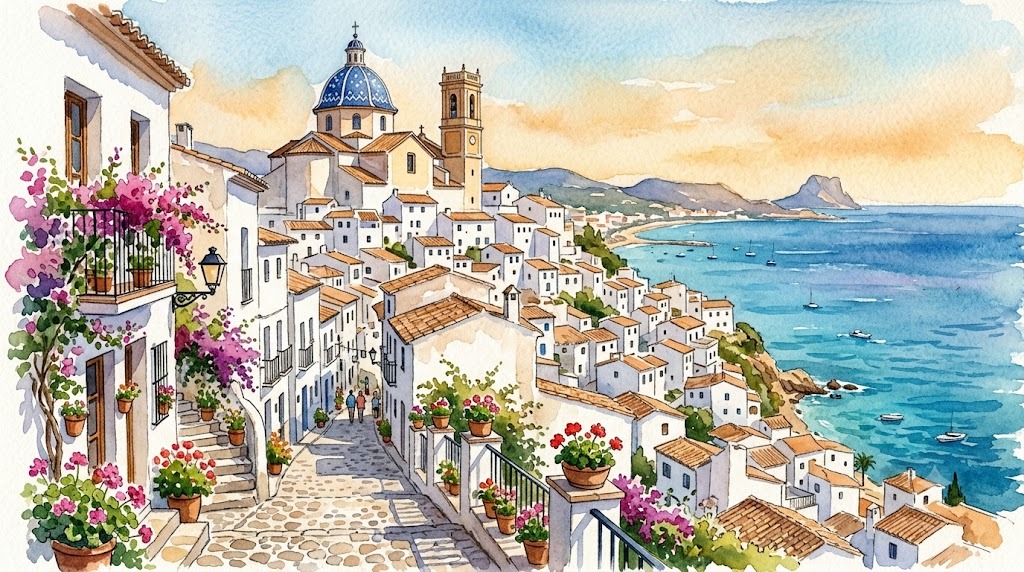
Altea: blue domes and not a metre of sand
Altea has 24,592 inhabitants (INE, 2025) and two things that set it apart from the rest of the coast:
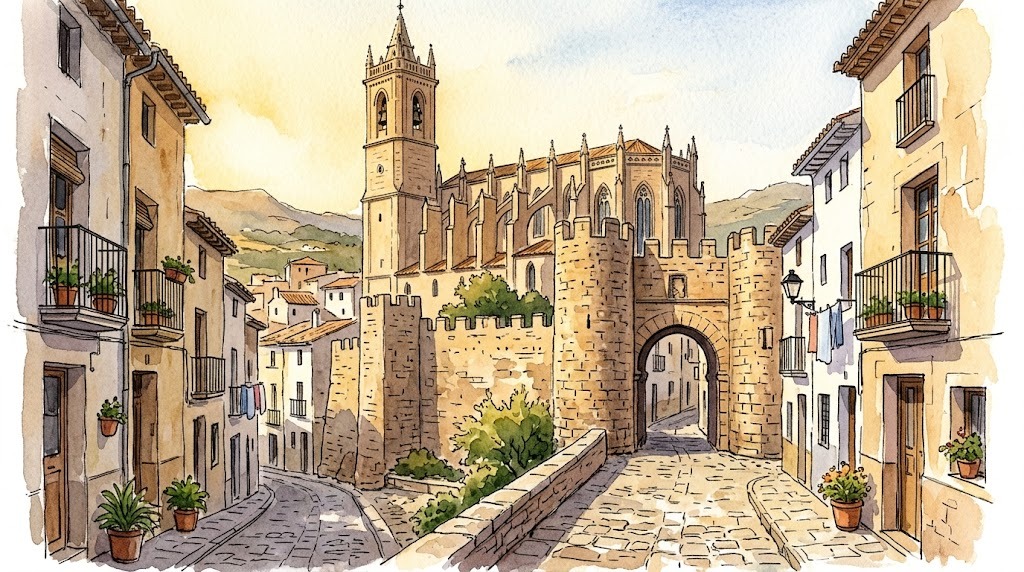
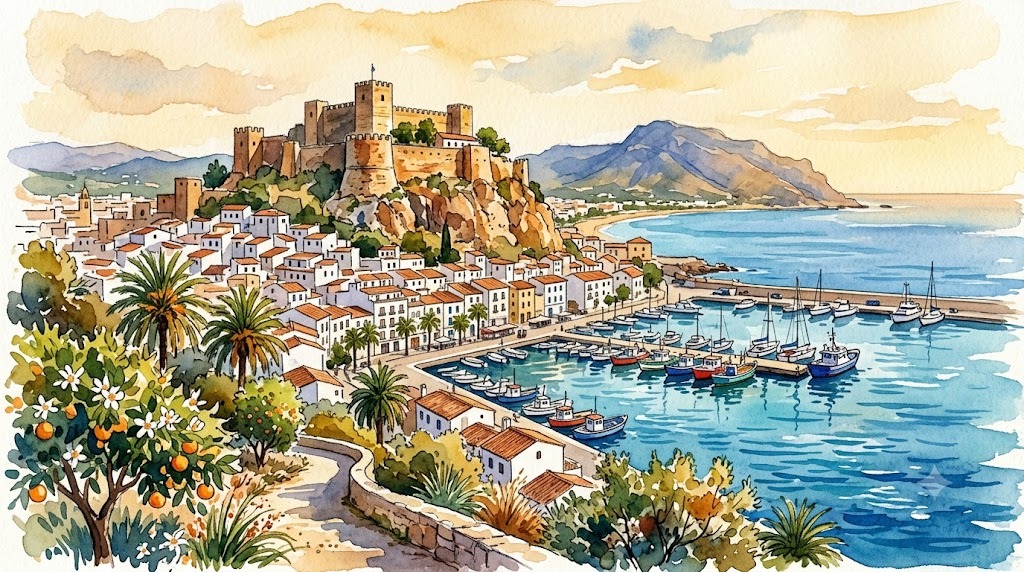
- The most photographed old town on the Costa Blanca: a fortified Renaissance enclosure on top of a hill, crowned by the church with the blue domes, which the regional government calls “the dome of the Mediterranean”.
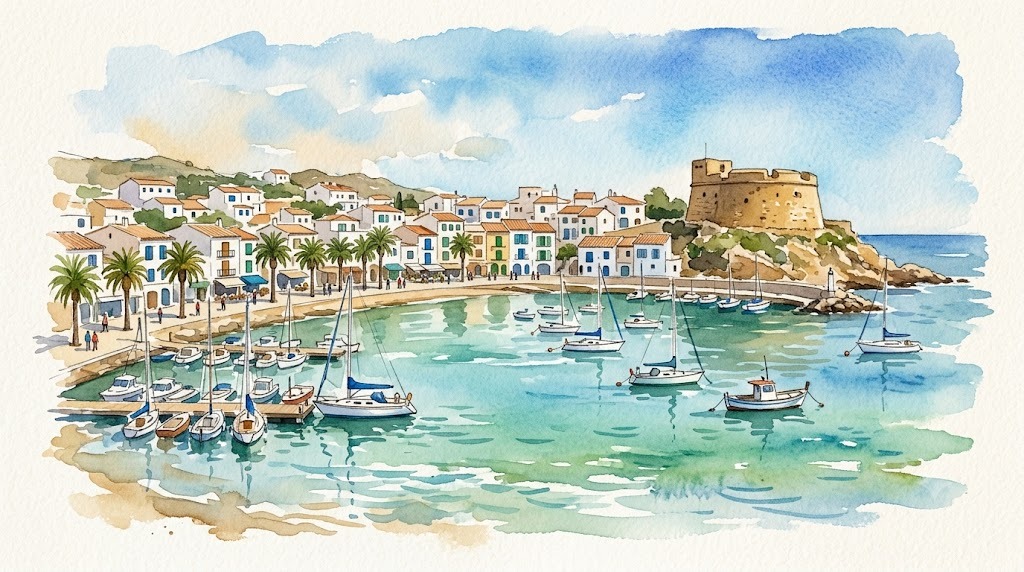
- That there is no sand here. Its 9 beaches are pebbles and gravel along more than 6 kilometres of coast. That puts off anyone after a comfortable towel, and it is exactly what keeps the water exceptionally clear: this is the best coast in the Marina Baixa for snorkelling straight off the shore.
If you are coming for a sandy beach, this is not your town. If you are coming for the old quarter and clear water, it is one of the best in the province.
Map of Altea
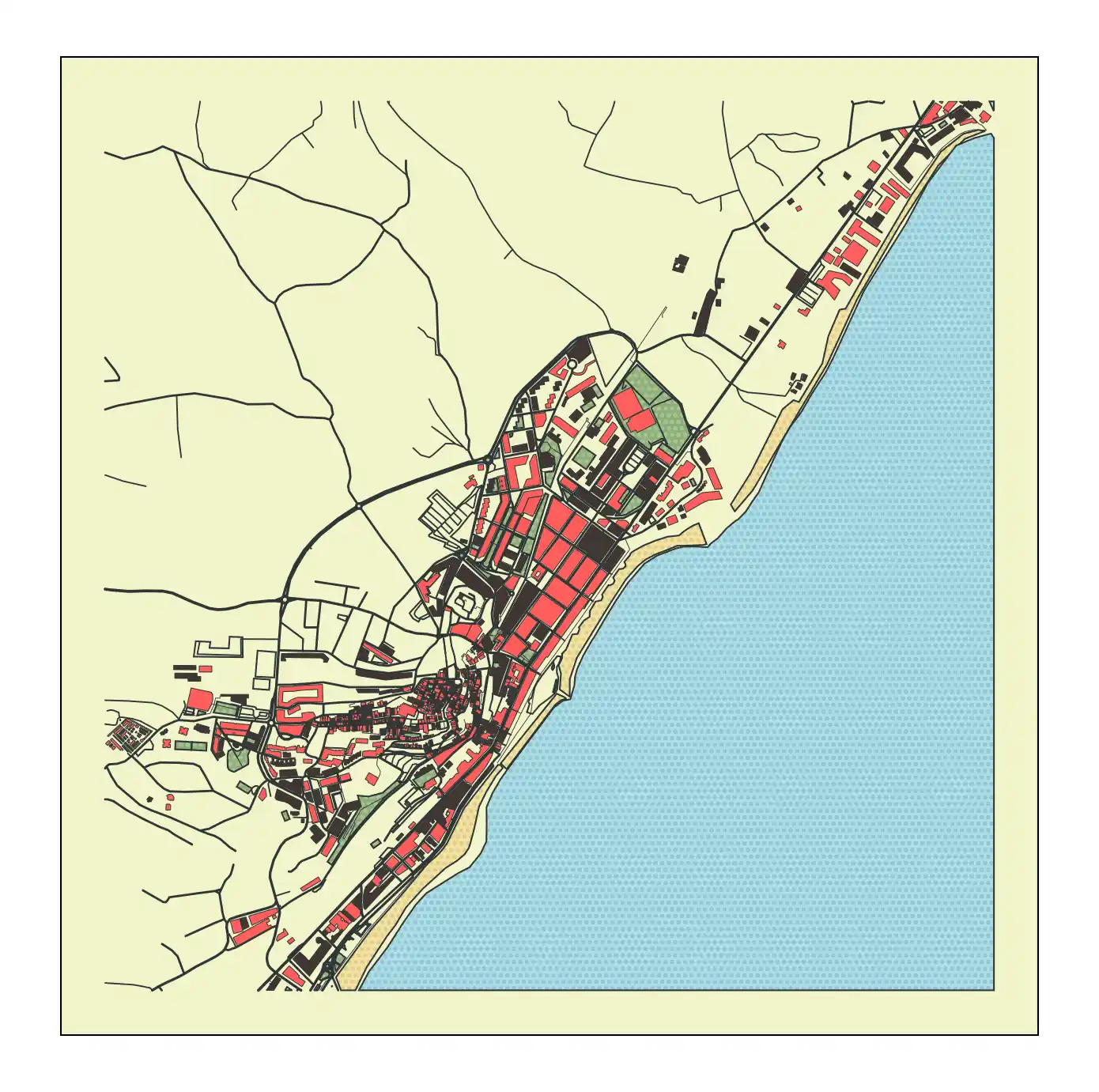
Topographic map of Altea: the old town on the hill, the promenade and the bay between the Mascarat and the Cap Blanc
Altea guides
- Altea beaches and coves — the 9 beaches north to south, from the Mascarat to the Cap Blanc, including the dog zone at l’Olla
- Marina Alta summer fiestas — the festive context of the neighbouring comarca
The old town: pedestrian, and uphill
The first thing to know: the enclosure is entirely pedestrian, with cobbled streets on a constant slope. You have to leave the car below and walk up.
- The two large, free car parks are La Basseta and Camí de l’Algar (the Algar river), about 10-15 minutes’ walk away
- From La Basseta or Foietes, count on 10-15 minutes of continuous climbing to the church square; from the TRAM station, 20-25
- It is not wheelchair accessible: cobbles, a steep gradient and flights of steps. In summer the council usually runs a circular bus from the car parks
You enter through two gates: the Portal Vell to the north and the Portal Nou to the east, from the 18th century. Full page with the viewpoints and practical detail: Altea old town.
The blue-domed church
Precision matters here, because almost every guide dates it wrong. The church you see today is not the original:
- The first one was built between 1607 and 1617 (architects Pere and Damià de la Càmara) and became the parish church in 1640
- The present building dates from 1901-1910, by Adrián and Julio Vela Gadea, consecrated on 18 September 1910
It is the Mare de Déu del Consol (Our Lady of Consolation): a Latin cross plan of Jesuit type, neo-baroque in style, two bell towers — the left one taller — and the two domes covered in glazed blue and white ceramic tiles laid like scales. Listed as an asset of local relevance since 2007.
Entry is free, but the parish publishes no public opening hours: in practice it opens around mass times. If you are going specifically to see the interior, plan for that uncertainty.
The beaches: 9 of them, all pebbles
North to south, the ones worth knowing:
- Cala del Mascarat and la Barreta — sheltered by the rocky point, with no facilities at all: pebbles, clean water and almost nobody
- Platja de l’Olla — one of the best loved: pines giving shade (a rarity on this coast), traditional boats hauled up on the shore and a dog-friendly zone. Good snorkelling
- Playa del Cap Negret — next to the volcanic formation of the same name; interesting for its geology as well as the swim
- Platja de la Roda (l’Espigó) — the urban beach, the one with the promenade and the restaurants
- Playa del Cap Blanc and Cala Solsida — the southern end
All 9, with access, parking and facilities, are in the beaches guide.
History: the town is born in 1617
Another fact usually told wrong. Altea was not founded in the 12th century: the present town grows out of the 1617 town charter, after earlier repopulation attempts had failed. Hence the enclosure is Renaissance rather than medieval, with its planned layout across the hill.
For centuries it was a village of fishermen and farmers. The shift into an artistic centre and tourist destination comes in the 20th century, above all from the 1960s on, when artists, writers and intellectuals began to settle — hence the galleries and studios still open in the old quarter today, and the Faculty of Fine Arts of the Miguel Hernández University.
Fiestas: the real calendar
| Fiesta | When (2026) |
|---|---|
| Nit de la Música | 16 May |
| Nit de l’Art | 6-7 June |
| Jazz Festival | 10-19 July |
| Setmana de Teatre | 1-8 August |
| Castell de l’Olla | 9 August |
| Patronal: Moors and Christians | 26-30 September |
| Fira de Nadal | 18-22 December |
Two dates stand out. The Castell de l’Olla, a single night in August, is a firework castle fired out over the sea from l’Olla beach, and it fills the whole bay. And the patronal fiestas in late September, with Moors and Christians, are the town’s big ones.
The Nit de l’Art in June is the one that best explains the town’s character: the studios and galleries of the old quarter open at night.
Getting there and getting around
- By TRAM: Altea has a stop on line 9, between Benidorm and Dénia. It is the easiest way to arrive without a car, though it is a 20-25 minute climb from the station to the old town
- By car: the N-332 or the AP-7. About an hour from Alicante airport
- Within the town: the old quarter is pedestrian. Park at La Basseta or Camí de l’Algar (both free) and walk up
When to come
- Sunset, any day: the domes and the bay in the western light over the Serra Gelada
- October to May: the old town is practically empty
- In July and August: go up first thing in the morning. By the afternoon the town is saturated and there is no shade on the slopes
- 9 August: the Castell de l’Olla, if you like fireworks
What’s nearby
- The Serra Gelada Natural Park, between Altea and Benidorm
- The Fonts de l’Algar in Callosa d’en Sarrià and the Puig Campana, inland
- To the north, Calpe and Benissa; to the south, Benidorm
- All the coves of the Costa Blanca, the index by municipality
Places in Altea
📖 Guides to Altea
- Altea Beaches and Coves: Complete Guide 2026 The 9 beaches and coves of Altea north to south, from Mascarat to Cap Blanc: pebbles, transparent water and the best shore snorkelling in the Marina Baixa. Access, parking, facilities and the dog-friendly area at l'Olla.